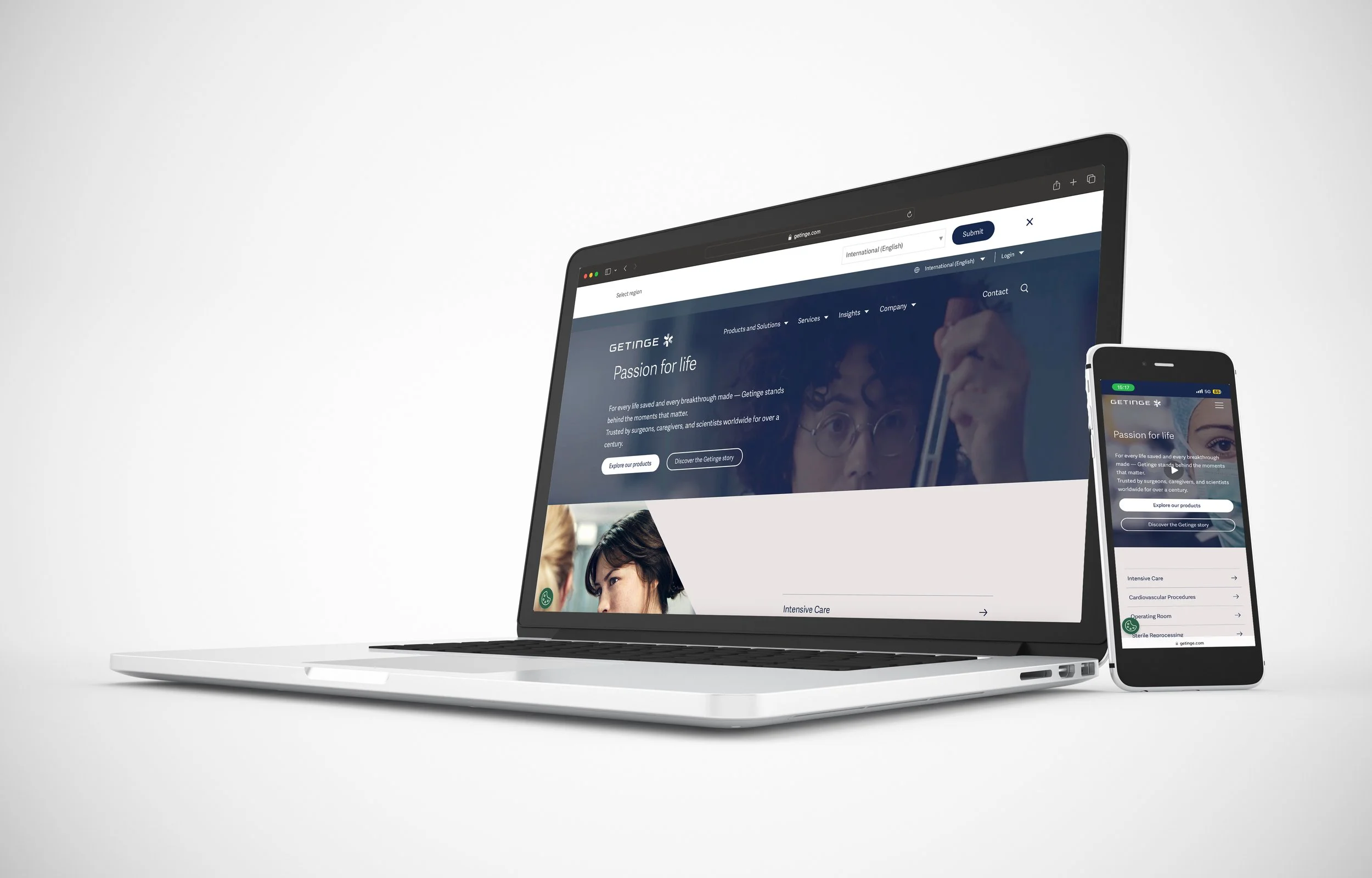
Getinge: Service and UX Design for the Global Web Platform.
Client: Getinge
Role: UX and Service Designer
Duration:
Scope: Global web portal (global and regional markets)
-
Getinge is a global medical technology company delivering solutions for healthcare and life sciences worldwide. This project focused on evolving Getinge’s global web portal to better support diverse user groups, strengthen brand clarity, and align digital experiences with the company’s service strategy.
Rather than a surface-level redesign, the work addressed deeper structural and experiential challenges—reframing the website as a strategic service touchpoint. The goal was to create a more user-centred, scalable, and intentional experience that supports awareness, decision-making, and long-term relationships across global and regional markets.
-
Getinge’s existing web portal functioned primarily as an information repository rather than a guided experience.
Key challenges included:
→ Information architecture that did not reflect user needs or decision-making processes
→ High bounce rates and low engagement from new users
→ Lack of clear calls to action guiding users toward next steps
→ Inconsistent structures and experiences across global and regional sites
→ Limited alignment between brand promise, service strategy, and digital execution
The challenge was to bring clarity to a complex ecosystem while balancing global consistency with regional flexibility.
-
→ Evolve the brand experience on the web through a more user-centred approach
→ Clarify information architecture and navigation
→ Guide users intentionally toward meaningful actions
→ Support global consistency while enabling regional needs
→ Establish UX and service design foundations for future growth
-
As a UX & Service Designer, I:
→ Led UX and service design efforts for the global web portal
→ Planned and synthesised mixed-methods research
→ Mapped customer journeys and service ecosystems
→ Defined information architecture and experience principles
→ Translated insights into UX concepts, guidelines, and design direction
→ Collaborated closely with stakeholders across global and regional teams
-
I worked closely with:
→ Digital product owners and marketing teams
→ Developers and technical stakeholders
→ Content and brand teams
→ Regional market representatives
This cross-functional collaboration required facilitation, alignment, and systems thinking to navigate organisational complexity and competing priorities.
Process
Research
We began with a mixed-methods research approach, combining quantitative and qualitative data to understand how users currently experienced Getinge’s website and where it failed to support their needs.
Quantitative research (Google Analytics, Hotjar) revealed:
→ High bounce rates and low session depth
→ A majority of new visitors requiring better onboarding
→ Navigation patterns that did not match user intent
→ Content priorities, with technical specifications being most sought after
Qualitative research complemented this by uncovering the “why” behind the numbers.
→ Customer journey mapping highlighted pain points and breakdowns across touchpoints
→ Stakeholder interviews revealed internal workflow challenges and misalignment between global and regional teams
→ Site audits exposed inconsistencies in navigation, forms, mobile behaviour, and content structures
This research confirmed that the problem was systemic, not cosmetic.
Synthesis
Research insights were synthesised into clear experience challenges:
→ The information architecture did not reflect user motivations or decision-making
→ Users lacked guidance toward meaningful next steps
→ Brand promise and service experience were fragmented across regions
From this synthesis, we reframed the website as a service touchpoint, not just a communication channel, and defined new experience goals aligned with user intent and business objectives.
Concept Development
Based on the synthesis, we defined a future-focused experience strategy built around three principles.
This phase resulted in a new sitemap, experience principles, and UX guidelines to support scalability and consistency.
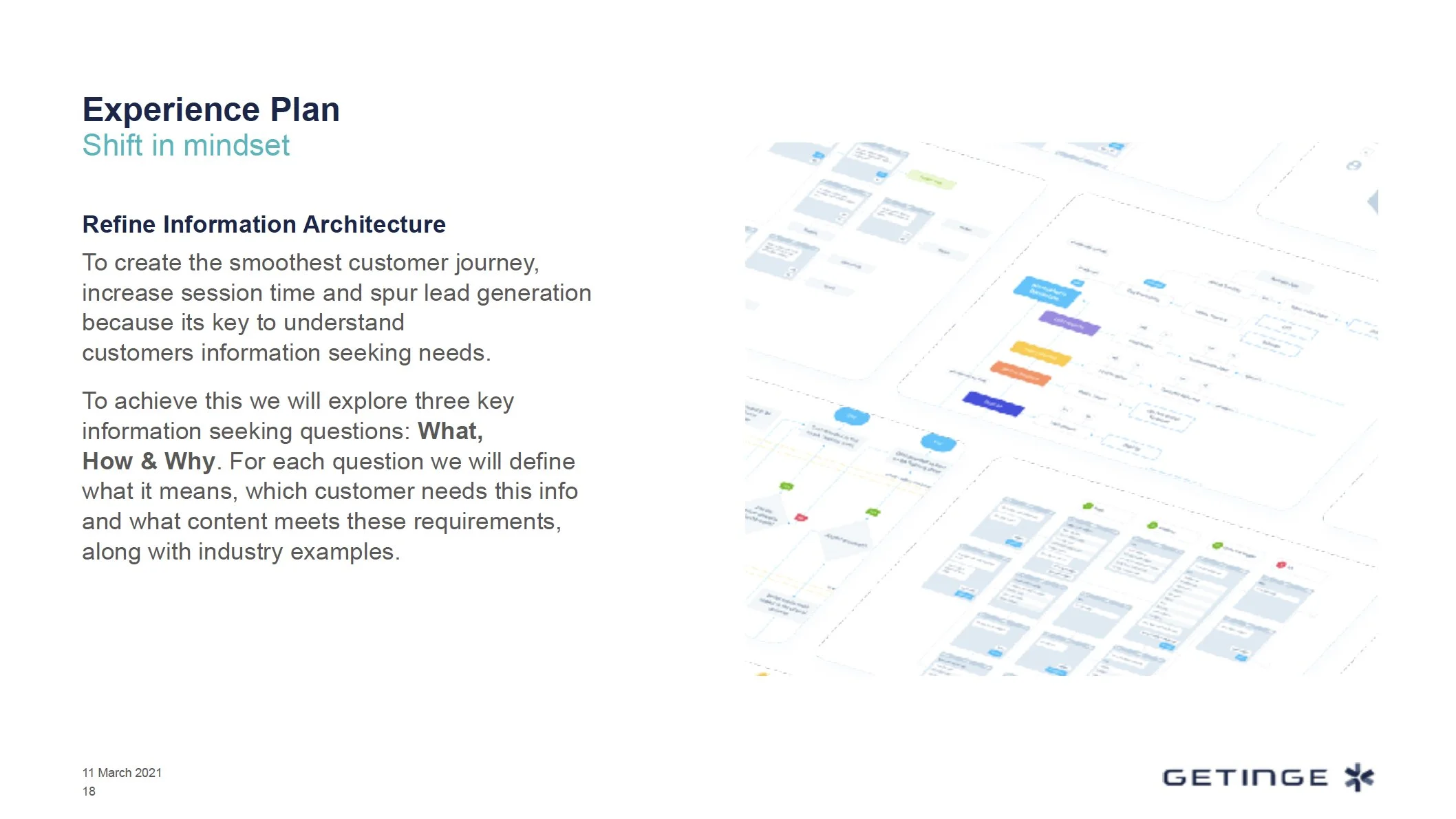
1: Refined information architecture, structured around what users need to know, how they act, and why it matters
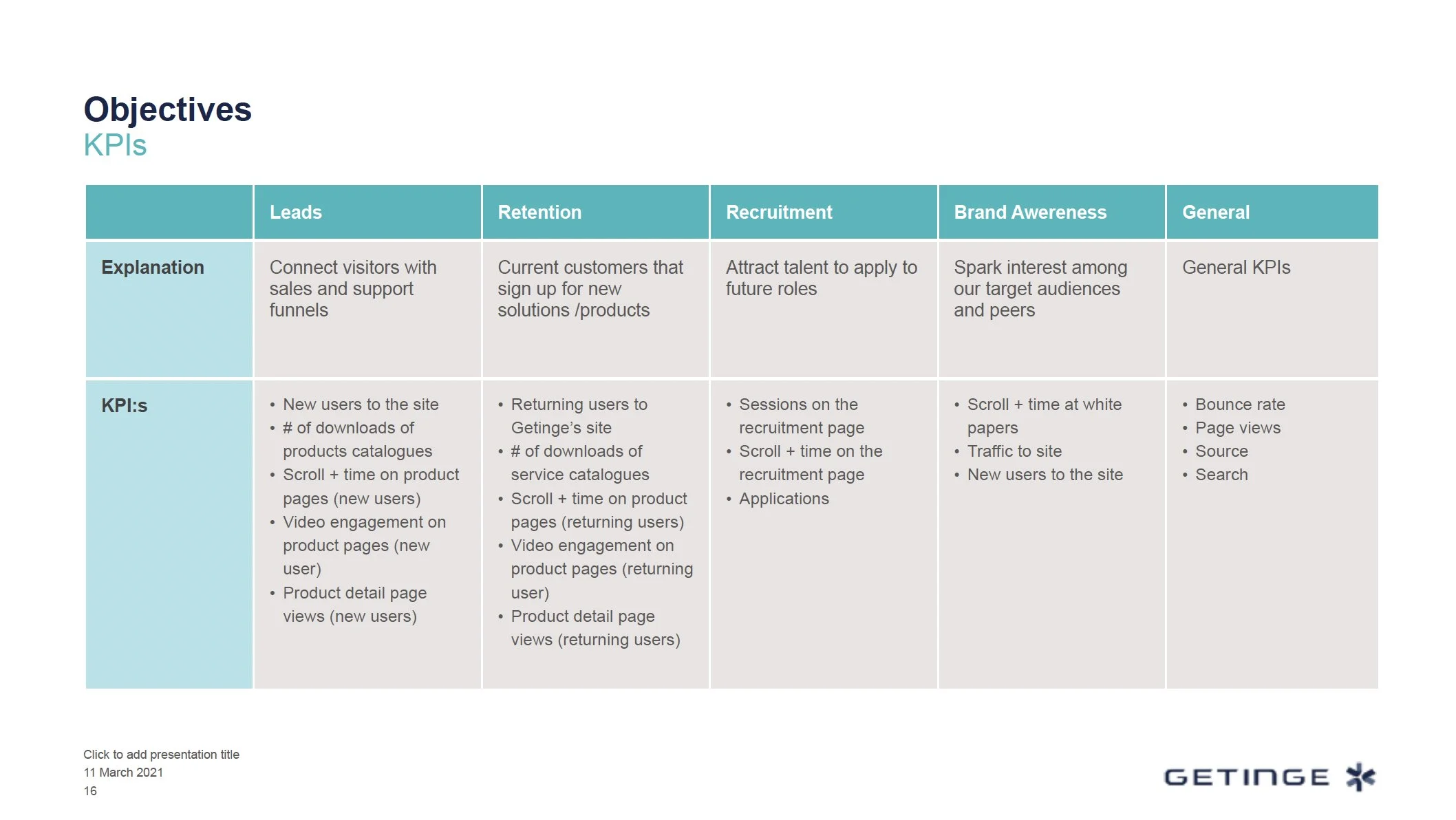
2: User-centred objectives and KPIs, shifting measurement from generic metrics to behavioural intent
3: Intentional guidance, helping users navigate complex offerings through clearer pathways and calls to action
-
![]()
01: Objectives and KPIs
-
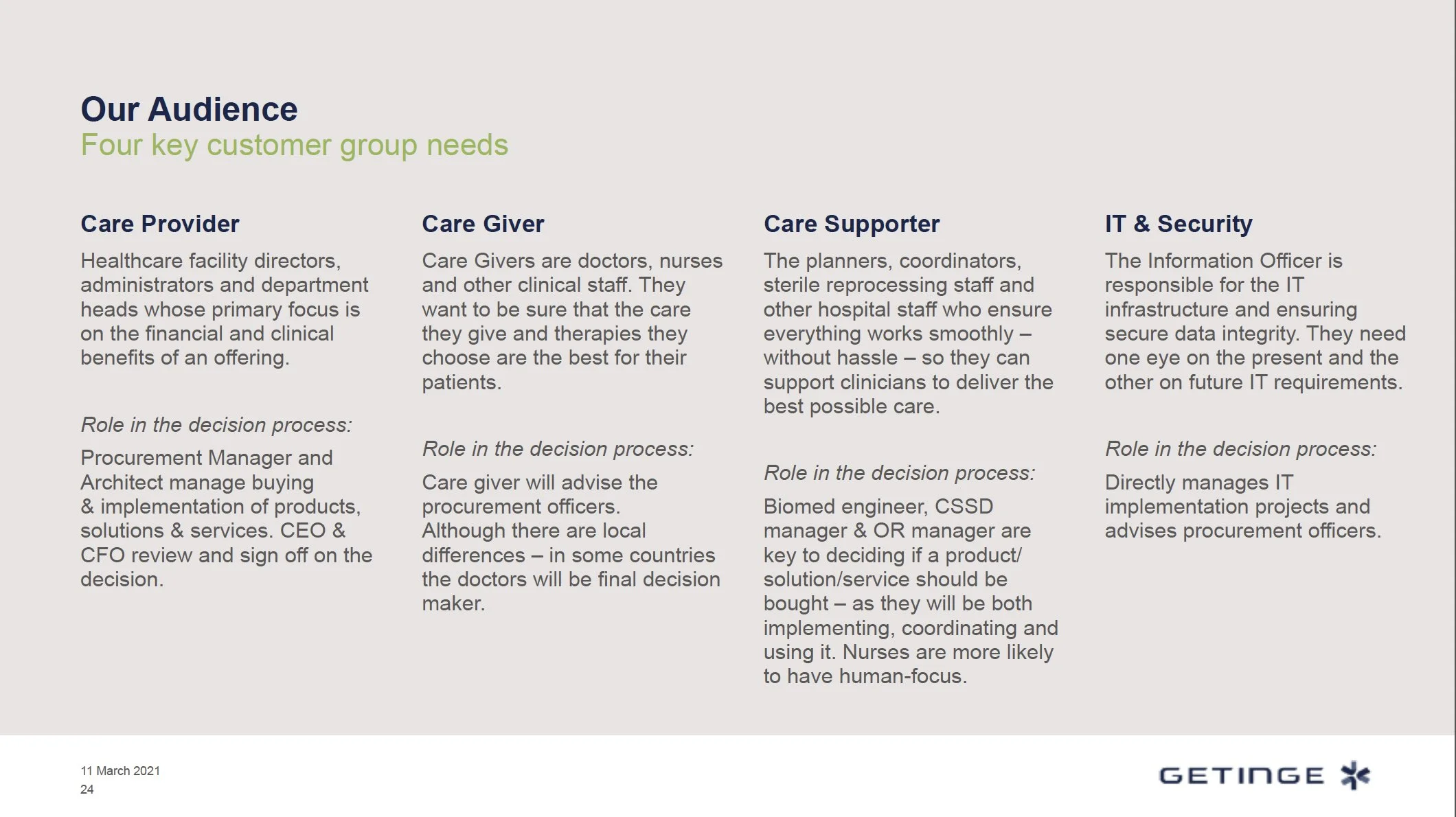
![02: Audience]()
02: Audience
-
![]()
03: Information architecture
-
![]()
04: Sitemap
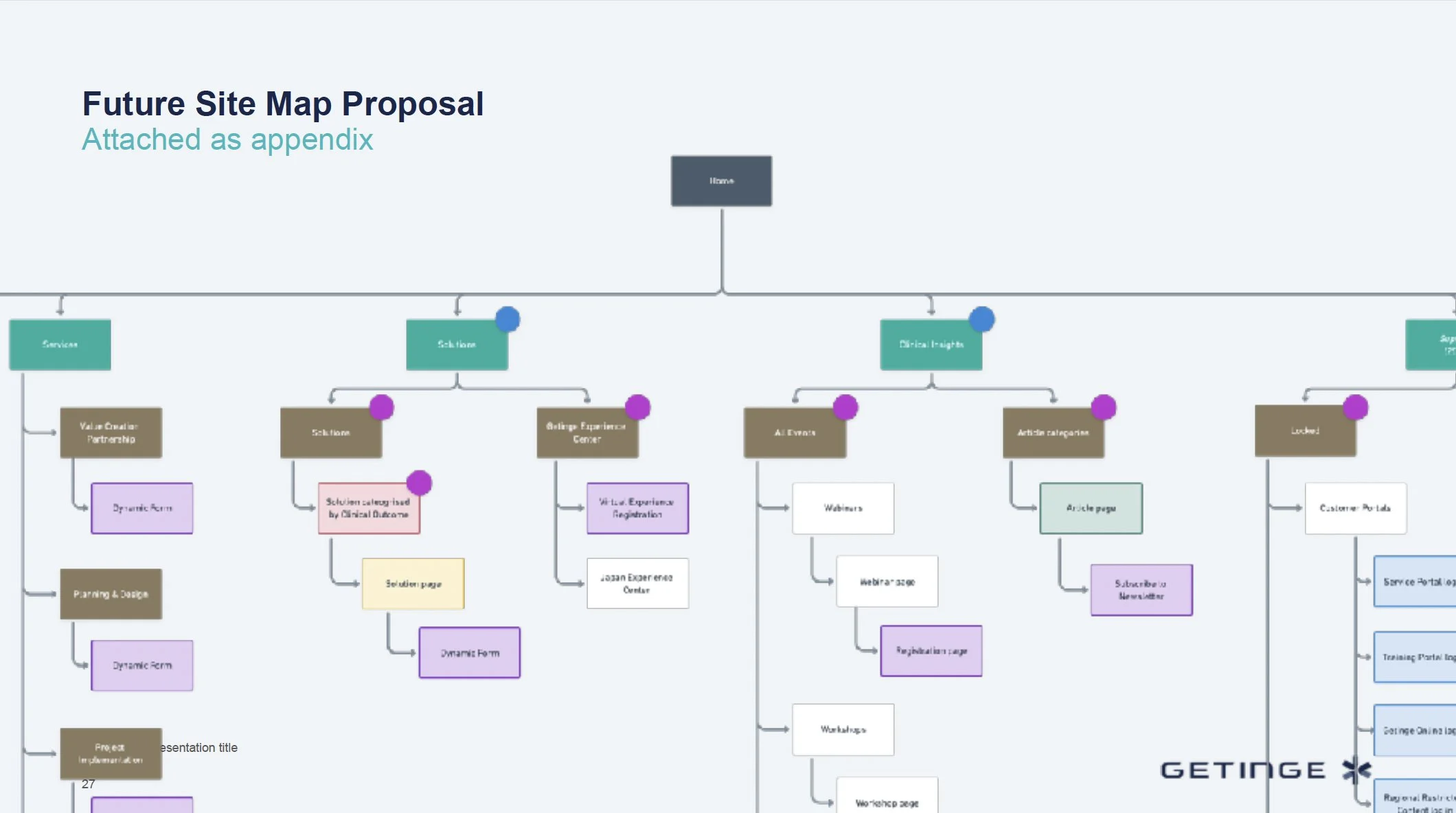
The strategy was translated into concrete UX and UI work
→ Content prioritisation and navigation models
→ Design concepts supporting global consistency with regional flexibility
The execution phase delivered a clear foundation for future development and iterative improvement.
The strategy was translated into:
→ End-to-end user flows for key journeys
→ UX and UI guidelines aligned with brand and service strategy
Visual Examples
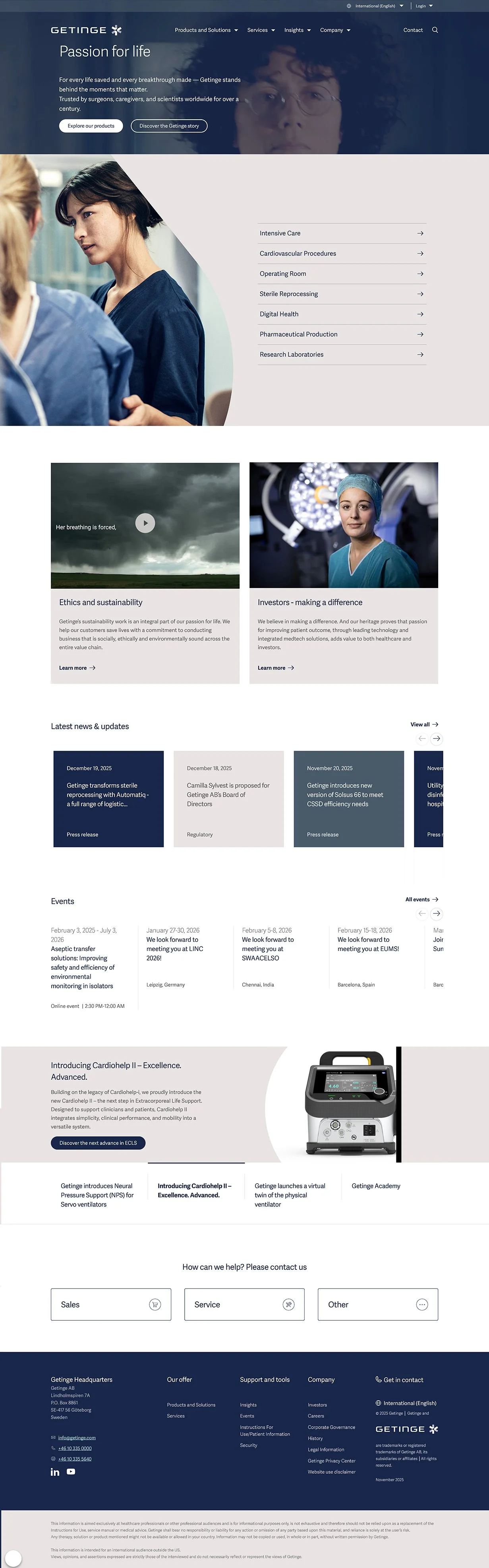
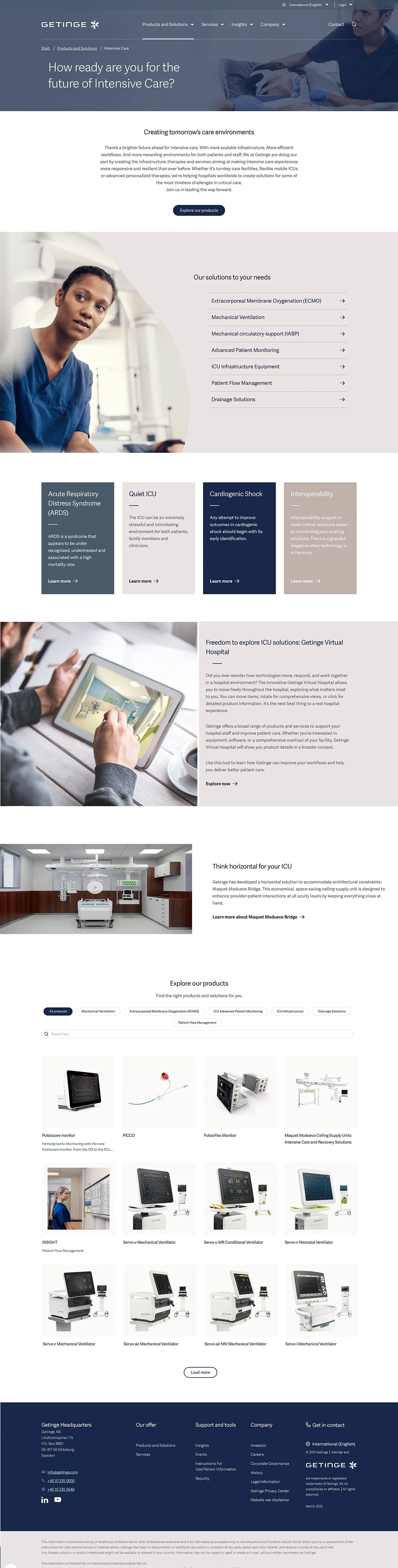
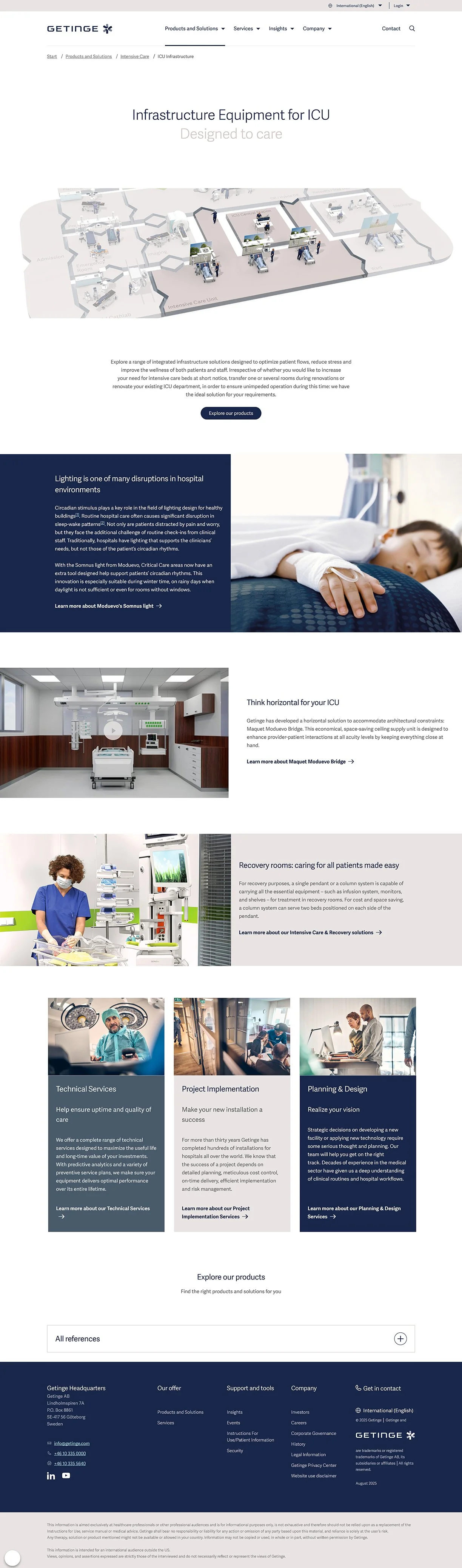
01 Landing and product Pages Redesign
Please note, this represents only a portion of the work delivered.
The redesigned homepage and product pages features improved navigation, clear calls to action, and a strong representation of Getinge’s brand and service strategy.
02 UX & UI Guidelines sample
Please note, this represents only a portion of the work delivered.
This example demonstrates interaction patterns, content hierarchy, and design principles used throughout key user journeys. It also addresses typography, colour, and components to ensure consistency across global and regional markets.
Outcomes and Impact
Impact:
→ Clearer user journeys and decision pathways
→ Stronger alignment between brand promise and digital experience
→ A shared UX foundation for global and regional teams
→ A shift toward user-centred KPIs and continuous learning
What we delivered:
→ New sitemap and information architecture
→ Customer journey maps
→ UX and UI guidelines
→ Visual audit and experience roadmap
→ Proposal for next-phase implementation
Reflection
This project reinforced my approach to service-led UX design in complex, global organisations.
Rather than treating the website as a collection of pages, we reframed it as a strategic service touchpoint—one that must balance user needs, organisational realities, and long-term scalability.
The work strengthened my belief that meaningful digital transformation starts with clarity, intent, and systems thinking — not tools or trends.